

Managing the Invisible: Your Guide to Living Well with IBS
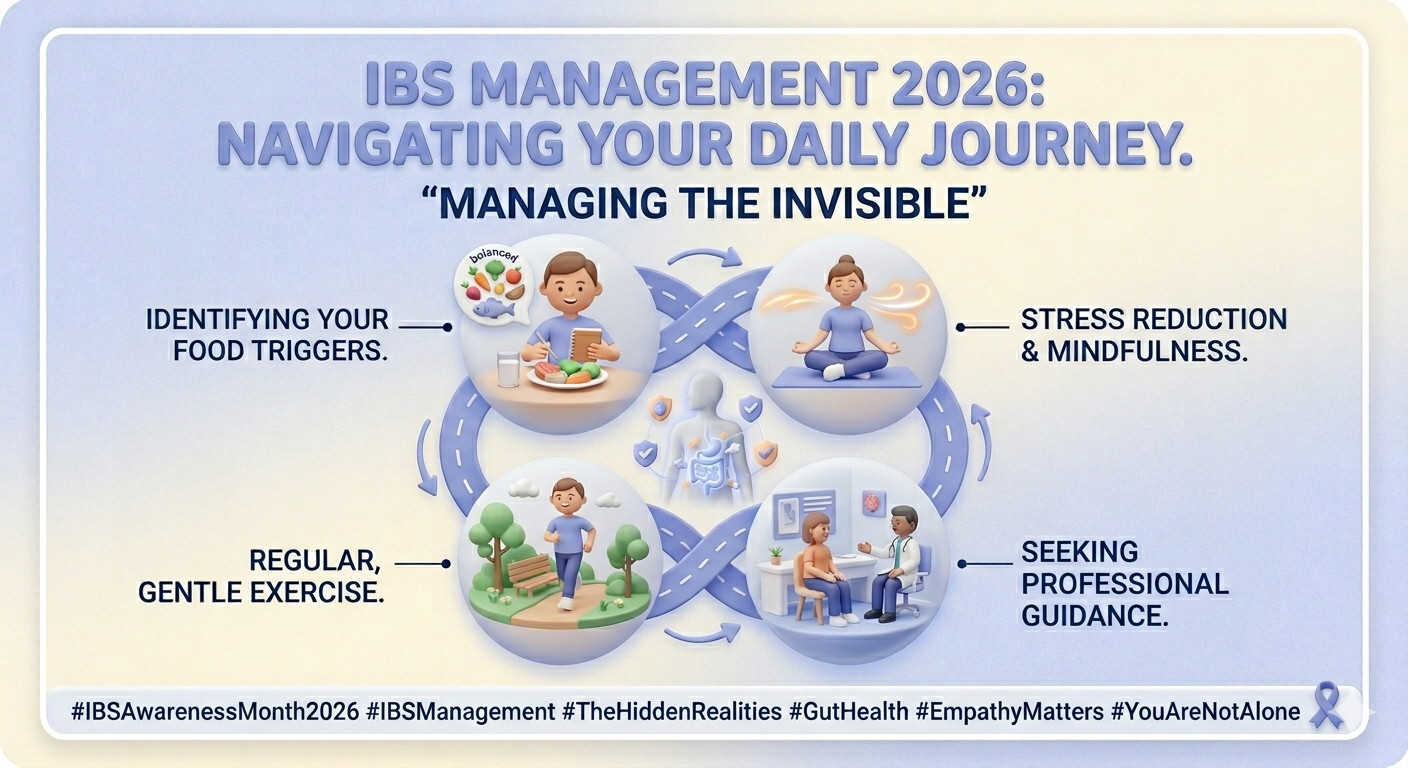
Managing Irritable Bowel Syndrome (IBS) is rarely about a single 'quick fix.' Instead, it is about building a personalized toolkit of habits that help stabilize your gut and improve your quality of life. As we navigate IBS Awareness Month 2026, let’s focus on the four pillars of effective management.
1. Identifying Your Unique Triggers
Everyone’s gut is different. What causes a flare-up for one person might be perfectly fine for another.
• Keep a Food Diary: Track what you eat and how you feel afterward. Look for patterns over 2–3 weeks.
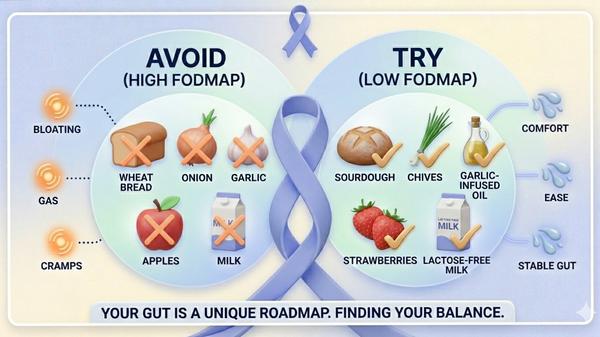
• Common Culprits: Many find relief by limiting high-FODMAP foods (certain fermentable carbs), caffeine, or highly processed fats.
• Non-Food Triggers: Poor sleep and erratic meal timings can also disrupt your digestive rhythm.
2. The Power of Mind-Gut Management
Since your brain and gut are in constant communication, calming your mind can directly soothe your digestive tract.
• Daily Mindfulness: Even 5–10 minutes of deep breathing or meditation can lower the 'stress signals' sent to your gut.
• Gut-Directed Therapy: Techniques like Cognitive Behavioral Therapy (CBT) or hypnotherapy have shown significant success in reducing the severity of IBS symptoms.
3. Movement as Medicine
Gentle, consistent physical activity helps keep things moving without overstressing your system.
• Low-Impact Exercise: Activities like yoga, walking, or swimming are ideal. They help reduce gas, bloating, and stress.
• Avoid Overexertion: During a flare-up, listen to your body. Intense high-impact workouts can sometimes trigger urgency for certain individuals.
4. Seeking Professional Partnership
IBS is a medical condition, and you shouldn't have to manage it alone.
• Consult a Specialist: A gastroenterologist can rule out other conditions and provide access to targeted medications.
• Work with a Dietitian: A registered dietitian specializing in gut health can help you navigate restrictive diets safely without missing out on essential nutrients.
Management is a journey, not a destination. Be patient with yourself as you find the balance that works for your body.