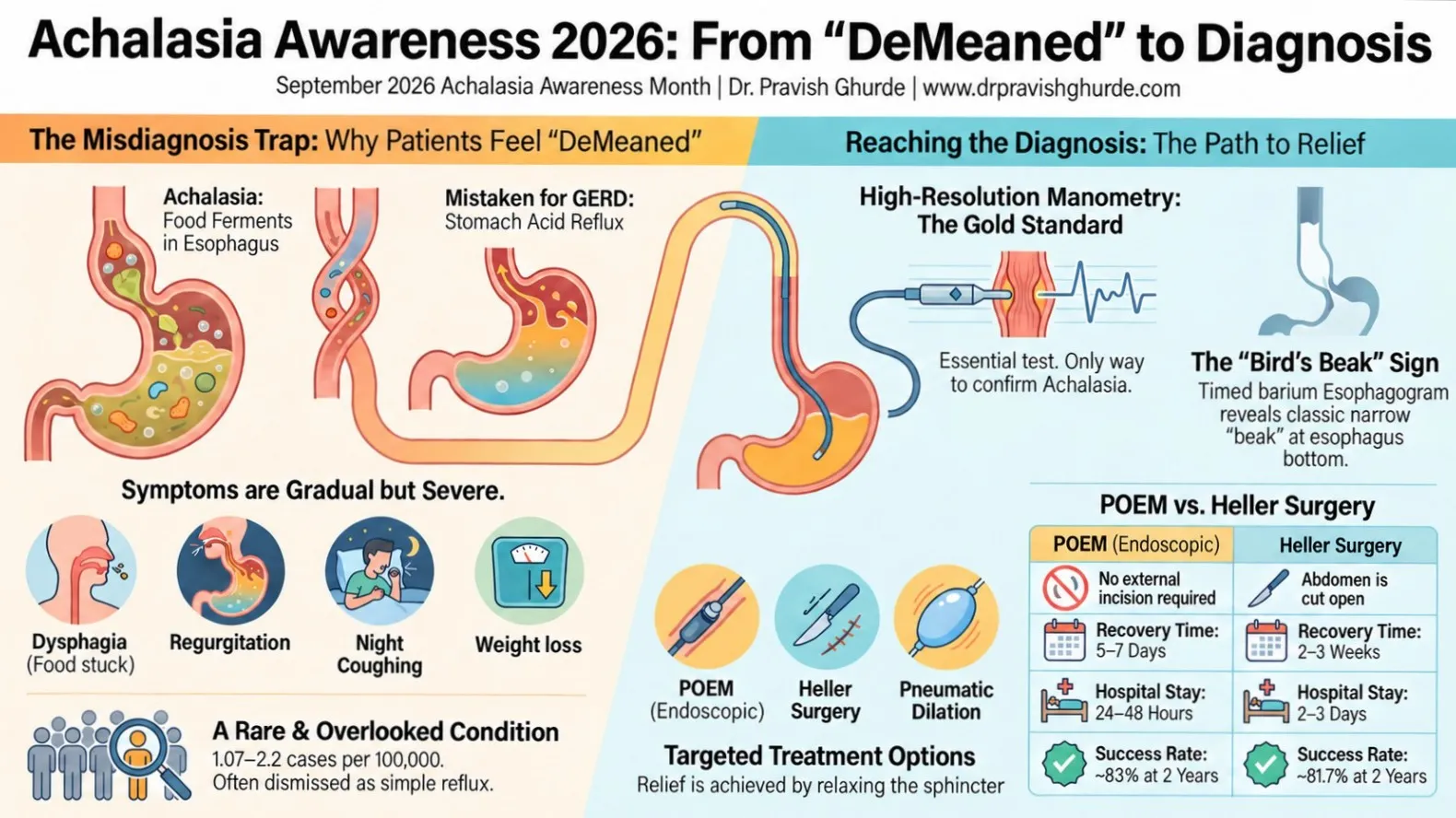
September is Achalasia Awareness Month, a time dedicated to shedding light on a rare, often misunderstood, and frequently misdiagnosed swallowing disorder. This year’s global theme, "DeMeanedToDiagnosis," powerfully captures the emotional and physical toll patients face—battling not only a chronic, debilitating condition but also the frustrating journey of being dismissed, misdiagnosed with common acidity or GERD, and delayed in finding answers.
As a specialist in gastroenterology, hepatology, and therapeutic endoscopy, Dr. Pravish Ghurde is committed to bridging this gap, raising awareness, and ensuring that no patient has to struggle in silence or feel diminished by their symptoms.
What is Achalasia Cardia?
Achalasia is a rare, chronic disorder of the oesophagus (the food pipe). Normally, when you swallow, the muscular ring at the lower end of your oesophagus—called the lower esophageal sphincter (LES)—relaxes to let food pass into the stomach.
In patients with achalasia:
• The nerves supplying the oesophagus degenerate, preventing it from properly moving food down (peristalsis).
• The LES fails to relax, trapping food and liquids in the oesophagus.
Why "DeMeanedToDiagnosis"? The Journey to Clarity
For many individuals, the road to an accurate diagnosis is long and exhausting. Because symptoms like difficulty swallowing (dysphagia), chest pain, regurgitation, and nocturnal coughing mimic common conditions like severe Gastroesophageal Reflux Disease (GERD) or anxiety, patients are often told it is "just acid reflux" or stress.
This delay can lead to:
• Significant, unintentional weight loss and malnutrition.
• Severe psychological distress from chronic, unexplained physical discomfort.
• Years of unmanaged symptoms before a timely motility test or endoscopy provides the correct answer.
The theme "DeMeanedToDiagnosis" serves as a vital reminder to listen to patients, validate their lived experiences, and prioritize advanced diagnostic evaluations when standard treatments fail.
Recognizing the Red Flags: When to See a Gastroenterologist
Are you or a loved one experiencing persistent digestive roadblocks? Look out for these signs:
1. Difficulty Swallowing (Dysphagia): Feeling like food (both solids and liquids) gets "stuck" on its way down to the stomach.
2. Regurgitation: Bringing back undigested food or saliva, especially when lying down.
3. Non-Cardiac Chest Pain: Spasms that can sometimes mimic heart trouble.
4. Weight Loss: Gradual, concerning drops in weight due to reduced food intake.
5. Frequent Heartburn or Nocturnal Coughing that does not respond to standard anti-acidity medications.
Advanced Diagnosis & Expert Care
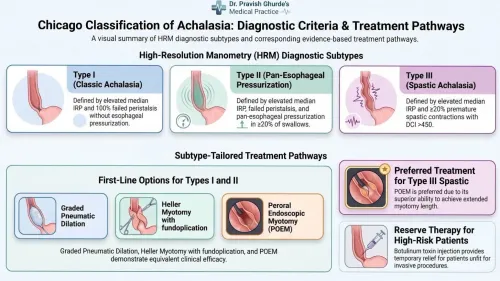
Achalasia requires specialized testing for accurate identification, typically involving Upper Gastrointestinal Endoscopy to rule out structural blockages, High-Resolution Manometry to measure esophageal pressures, and Barium Swallow studies.
While achalasia is a lifelong condition, modern medicine offers incredible interventions to restore quality of life. Treatment strategies range from medical management and endoscopic therapies (like pneumatic dilation or POEM - Peroral Endoscopic Myotomy) to surgical options tailored to the individual.
Take Control of Your Digestive Health
If you have been struggling with persistent swallowing difficulties or feel your symptoms have been overlooked, you deserve a thorough and compassionate evaluation. Early diagnosis changes lives.
Schedule a Consultation with Dr. Pravish Ghurde:
• OPD Location:
1. Platinum Hospital, Neptune Colorscape, Dumping Rd, Siddharth Nagar, Mulund West, Mumbai. Time: Monday-Saturday 10 am to 4 pm.
2. Tieten Medicity Hospital, Kasarvadavali, Thane West. Time: Monday & Thursday 5:30 pm to 7:30 pm.
• Website: www.drpravishghurde.com
Let’s stand together this September to validate patients' experiences, spread awareness, and move swiftly from distress to accurate diagnosis.
As a specialist in gastroenterology, hepatology, and therapeutic endoscopy, Dr. Pravish Ghurde is committed to bridging this gap, raising awareness, and ensuring that no patient has to struggle in silence or feel diminished by their symptoms.
What is Achalasia Cardia?
Achalasia is a rare, chronic disorder of the oesophagus (the food pipe). Normally, when you swallow, the muscular ring at the lower end of your oesophagus—called the lower esophageal sphincter (LES)—relaxes to let food pass into the stomach.
In patients with achalasia:
• The nerves supplying the oesophagus degenerate, preventing it from properly moving food down (peristalsis).
• The LES fails to relax, trapping food and liquids in the oesophagus.
Why "DeMeanedToDiagnosis"? The Journey to Clarity
For many individuals, the road to an accurate diagnosis is long and exhausting. Because symptoms like difficulty swallowing (dysphagia), chest pain, regurgitation, and nocturnal coughing mimic common conditions like severe Gastroesophageal Reflux Disease (GERD) or anxiety, patients are often told it is "just acid reflux" or stress.
This delay can lead to:
• Significant, unintentional weight loss and malnutrition.
• Severe psychological distress from chronic, unexplained physical discomfort.
• Years of unmanaged symptoms before a timely motility test or endoscopy provides the correct answer.
The theme "DeMeanedToDiagnosis" serves as a vital reminder to listen to patients, validate their lived experiences, and prioritize advanced diagnostic evaluations when standard treatments fail.
Recognizing the Red Flags: When to See a Gastroenterologist
Are you or a loved one experiencing persistent digestive roadblocks? Look out for these signs:
1. Difficulty Swallowing (Dysphagia): Feeling like food (both solids and liquids) gets "stuck" on its way down to the stomach.
2. Regurgitation: Bringing back undigested food or saliva, especially when lying down.
3. Non-Cardiac Chest Pain: Spasms that can sometimes mimic heart trouble.
4. Weight Loss: Gradual, concerning drops in weight due to reduced food intake.
5. Frequent Heartburn or Nocturnal Coughing that does not respond to standard anti-acidity medications.
Advanced Diagnosis & Expert Care
Achalasia requires specialized testing for accurate identification, typically involving Upper Gastrointestinal Endoscopy to rule out structural blockages, High-Resolution Manometry to measure esophageal pressures, and Barium Swallow studies.
While achalasia is a lifelong condition, modern medicine offers incredible interventions to restore quality of life. Treatment strategies range from medical management and endoscopic therapies (like pneumatic dilation or POEM - Peroral Endoscopic Myotomy) to surgical options tailored to the individual.
Take Control of Your Digestive Health
If you have been struggling with persistent swallowing difficulties or feel your symptoms have been overlooked, you deserve a thorough and compassionate evaluation. Early diagnosis changes lives.
Schedule a Consultation with Dr. Pravish Ghurde:
• OPD Location:
1. Platinum Hospital, Neptune Colorscape, Dumping Rd, Siddharth Nagar, Mulund West, Mumbai. Time: Monday-Saturday 10 am to 4 pm.
2. Tieten Medicity Hospital, Kasarvadavali, Thane West. Time: Monday & Thursday 5:30 pm to 7:30 pm.
• Website: www.drpravishghurde.com
Let’s stand together this September to validate patients' experiences, spread awareness, and move swiftly from distress to accurate diagnosis.
Keywords