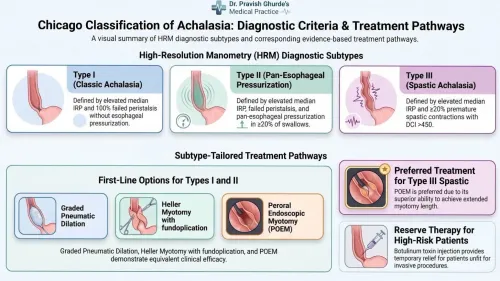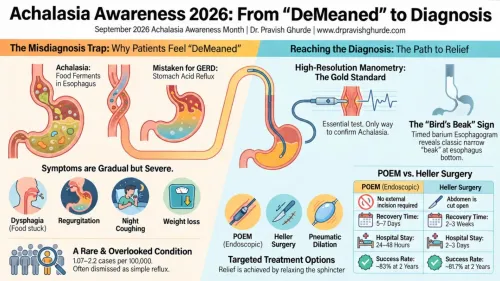
For individuals diagnosed with achalasia, receiving a definitive diagnosis and undergoing successful treatment—whether through Per-Oral Endoscopic Myotomy (POEM), Laparoscopic Heller Myotomy (LHM), or Pneumatic Dilation—marks a major turning point. However, because achalasia is a chronic motility disorder, long-term management and mindful lifestyle adjustments are essential for sustaining your quality of life.
Here is what you need to know about managing your health long-term after treatment for achalasia.
1. Understanding Post-Treatment Reflux Monitoring
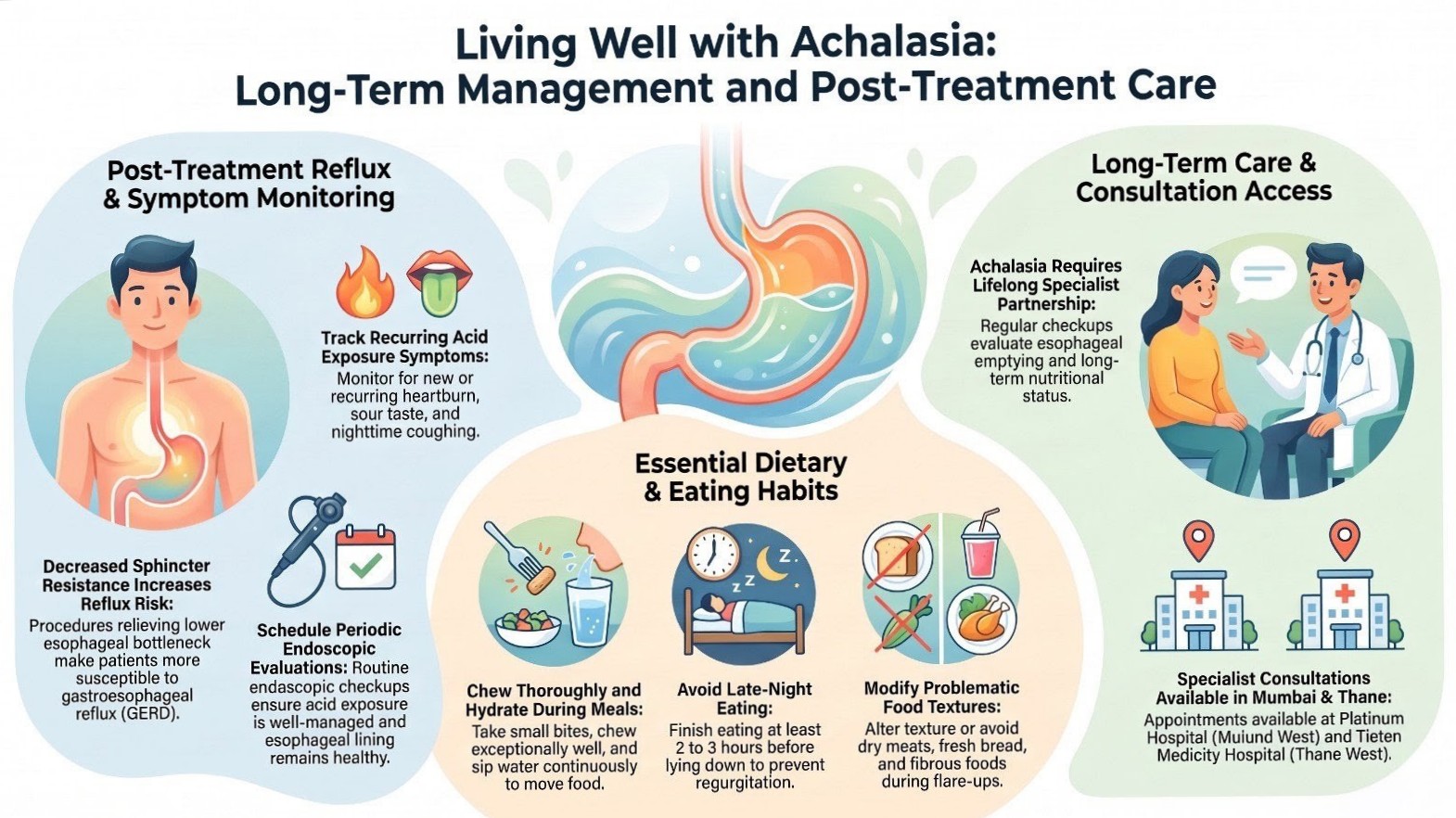
Interventions designed to relieve the tight lower esophageal sphincter (LES)—such as POEM, Heller myotomy, or dilation—effectively open the bottleneck to let food pass smoothly into the stomach. However, lowering this barrier can sometimes make patients more susceptible to gastroesophageal reflux (GERD).
• Symptom Awareness: Keep track of any new or recurring heartburn, sour taste, or nighttime coughing.
• Clinical Follow-up: Routine evaluations and periodic endoscopies may be recommended by Dr. Pravish Ghurde to monitor the esophageal lining and ensure acid exposure is well-managed.
2. Dietary Adjustments and Mindful Eating Habits
Even after successful treatment, your oesophagus functions differently than a normal, peristaltic food pipe. Adopting smart eating habits can make a dramatic difference in your daily comfort:
• Chew Thoroughly: Take smaller bites and chew your food exceptionally well.
• Stay Hydrated While Eating: Sip water consistently during meals to help wash food down smoothly.
• Avoid Late-Night Meals: Try to finish eating at least 2 to 3 hours before lying down to prevent nighttime regurgitation or reflux.
• Listen to Your Body: If certain foods (like dry meats, fresh bread, or fibrous vegetables) feel difficult to pass, modify their texture or avoid them during flare-ups.
3. The Importance of Long-Term Follow-Up
Achalasia is a lifelong condition requiring a trusted partnership between you and your gastroenterologist. Regular follow-up appointments allow Dr. Pravish Ghurde to assess your nutritional status, evaluate your esophageal emptying, and fine-tune your long-term management strategy.
A Note from Dr. Pravish Ghurde:
“Treating achalasia successfully requires a personalized approach, from accurate manometry diagnosis to post-procedure support. You do not have to navigate your digestive health journey alone.”
Schedule Your Follow-Up or Consultation Today
If you have undergone achalasia treatment and want to ensure your long-term management is on track, or if you are seeking expert guidance for persistent swallowing difficulties, book a consultation with Dr. Pravish Ghurde:
• Platinum Hospital: Neptune Colorscape, Dumping Rd, Siddharth Nagar, Mulund West, Mumbai (Monday–Saturday, 10 AM to 4 PM)
• Tieten Medicity Hospital: Kasarvadavali, Thane West (Monday & Thursday, 5:30 PM to 7:30 PM)
Visit www.drpravishghurde.com to learn more or schedule your appointment online.
Keywords