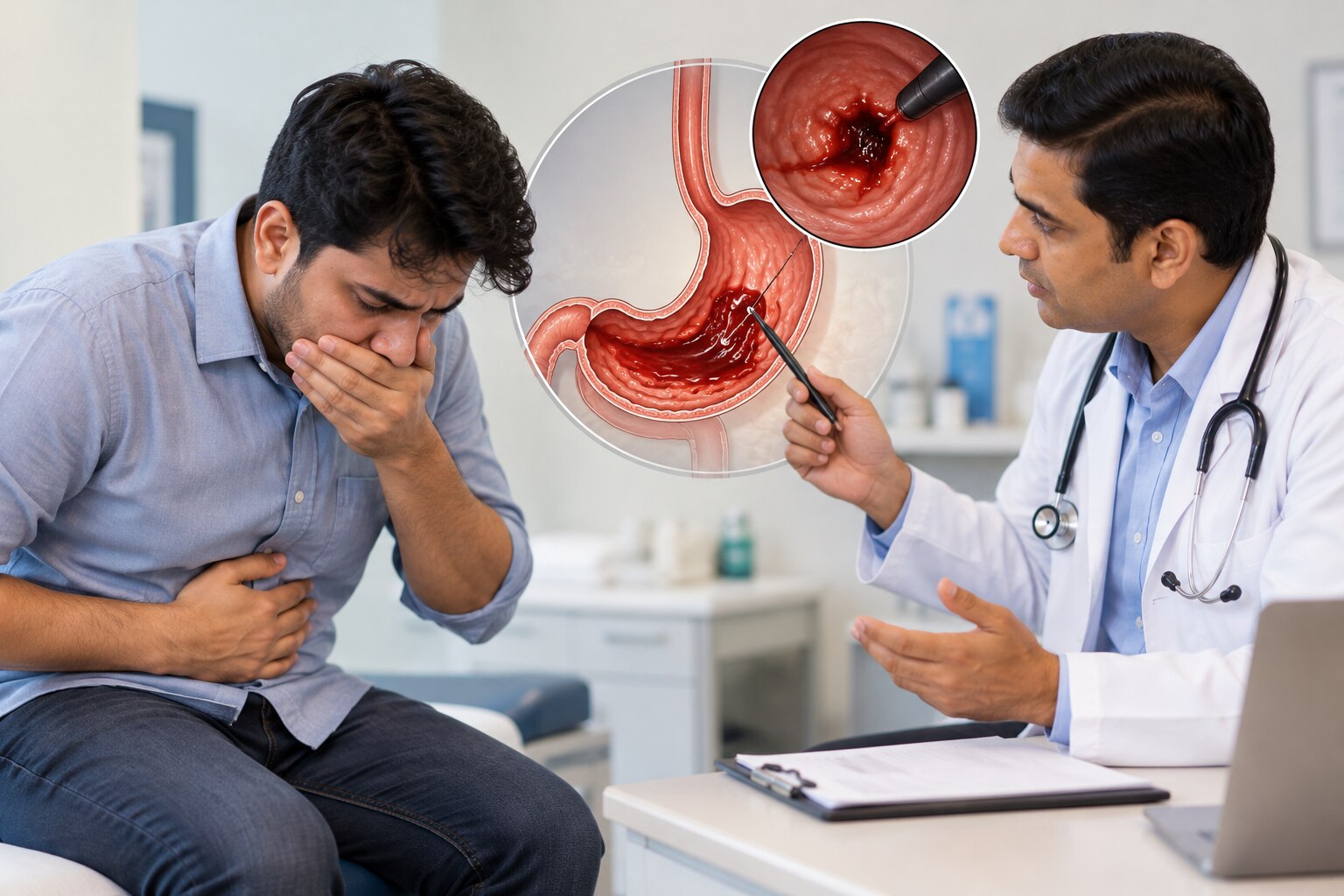
Blood in vomit or stool can be difficult to identify, especially when food, medicines, or swallowed blood create similar colours. You will learn how haematemesis and melena look, which warning signs indicate dangerous blood loss, and what to do before emergency help arrives.
Key takeaways
- Coffee-ground vomit still requires urgent medical assessment.
- Call emergency services for fainting, confusion, heavy bleeding, or black stools.
- Do not eat, drink, or take aspirin while waiting for help.
- Blood thinners, ulcers, liver disease, and NSAIDs raise bleeding risk.
What Blood in Vomit or Stool Actually Looks Like
Haematemesis is blood brought up by vomiting. Bright-red blood vomit suggests fresh bleeding, while dark brown or grainy coffee-ground vomit reflects blood changed by stomach acid. Coffee-ground vomit does not prove that bleeding has stopped or that the amount is small.
Red food, coloured drinks, or medicine residue can look similar, so note whether the material was liquid blood, clots, or recognizable food.
Melena means digested blood passed in stool. The melena appearance and smell are distinctive: stool is usually black, tarry, sticky, difficult to wipe away, and unusually foul-smelling. Iron tablets, bismuth medicines, and dark foods can also turn stool black, but they do not usually create the tar-like texture and powerful odour of melena.
Black stool with weakness, faintness, or dizziness needs medical assessment even if you take iron or bismuth.
Swallowed blood from a nosebleed, bleeding gums, or a mouth injury can appear in vomit, especially as small streaks mixed with mucus. A recent nosebleed or mouth bleed supports that explanation, but it cannot safely rule out haematemesis.
Bright-red or maroon blood passed from the rectum can also come from a rapid upper-GI bleed, particularly with faintness or a racing heartbeat. Do not use colour alone to decide that bleeding is harmless.
Which Symptoms Mean You Need Emergency Care Now?
Call emergency services immediately if vomiting blood is accompanied by fainting, confusion, severe weakness, or instability. These signs can mean that blood loss has reduced circulation, even if abdominal pain is absent.
Warning signs of significant blood loss or shock include:
- Rapid heartbeat, shortness of breath, or worsening dizziness
- Pale clammy skin, sweating, or unusual weakness
- Fainting, confusion, difficulty staying awake, or collapse
- Very little urine or no urination for several hours
- Black, tarry stools with light-headedness or weakness
- Repeated vomiting of bright-red blood or dark coffee-ground material
Do not drive yourself if you feel faint, confused, breathless, or unstable. Ask someone to call emergency services and stay with you.
| Situation | Action | Why it matters |
|---|---|---|
| Vomiting blood with fainting, confusion, or shock signs | Call emergency services now | Circulating blood volume may be dangerously low |
| Black tarry stools with weakness, dizziness, or a rapid heartbeat | Call emergency services now | Internal bleeding may be continuing |
| Suspected bleeding without these warning signs | Obtain urgent medical advice; do not wait for a routine appointment | Serious ulcer bleeding can be painless and worsen suddenly |
Do not use a haemoglobin number or a self-calculated Glasgow-Blatchford Score to delay help. Only clinical assessment can establish whether outpatient follow-up is safe; a score of 0–1 applies after professional evaluation, not as a home rule.
What to Do While Waiting for Medical Help
If you are vomiting, lie on side when vomiting, with your head turned to prevent inhaling vomit. If you feel faint but are awake, lie flat and do not stand or walk alone. Do not drive yourself; ask someone to stay with you until emergency help arrives.
Avoid food and drink, including water, alcohol, and oral rehydration drinks, until emergency clinicians advise you. Do not take antacids, painkillers, iron, or any other medicine to test whether symptoms improve. Do not make yourself vomit.
Tell the emergency team every medicine you take, the strength, why you take it, and the exact time and amount of your last dose. This information affects bleeding risk and treatment.
| Medicine | Why clinicians need to know | What to report |
|---|---|---|
| Aspirin, ibuprofen, naproxen | These can damage the stomach lining or impair clotting | Name, strength, reason, and last dose time |
| Warfarin, apixaban, rivaroxaban | These anticoagulants can increase or prolong bleeding | Last dose, missed doses, and any dose change |
| Clopidogrel | This antiplatelet medicine can make bleeding harder to stop | Last dose and whether it was prescribed after a stent or stroke |
Do not stop a prescribed blood thinner permanently on your own; report it while seeking urgent care. Also mention liver disease, ulcers, allergies, and recent procedures.
Which Conditions and Medicines Increase the Risk?
A painless upper GI bleed is still dangerous. Peptic ulcer bleeding can occur without abdominal pain, and nonsteroidal anti-inflammatory drugs (NSAIDs) can cause serious ulcers with few warning symptoms.
| Risk factor | Why it raises concern | Examples |
|---|---|---|
| Peptic ulcer disease | An ulcer can erode a blood vessel silently. Helicobacter pylori and NSAIDs are common causes. | Ibuprofen, naproxen, diclofenac, aspirin |
| Liver disease and varices | Cirrhosis and portal hypertension enlarge fragile veins in the oesophagus or stomach; a rupture can cause rapid blood loss. | Chronic hepatitis, fatty-liver cirrhosis, known varices |
| Recent forceful vomiting | Repeated retching can split the gastro-oesophageal junction, causing a Mallory-Weiss tear. | Vomiting after gastroenteritis, binge drinking, or severe morning sickness |
| Alcohol use | Heavy or repeated alcohol use irritates the stomach and can worsen liver disease and variceal bleeding. | Binge drinking, alcohol dependence |
| Blood-thinning medicines | These medicines can turn a small lesion into prolonged or heavy bleeding. | Warfarin, apixaban, rivaroxaban, clopidogrel, aspirin |
Do not assume the absence of pain makes black stool or blood-stained vomit safe. Report every medicine, including over-the-counter NSAIDs, aspirin, iron tablets, and herbal products, plus the last dose and any liver disease or previous ulcer. Never stop a prescribed anticoagulant without medical advice, but seek urgent assessment for suspected bleeding.
What Happens in Emergency Assessment and Treatment?
Emergency assessment confirms how unstable you are and where the blood is coming from; stool appearance alone cannot do either. Clinicians act in sequence:
1. They measure blood pressure and pulse, check mental alertness, skin colour and urine output, and place an intravenous line. Faintness, a fast pulse, low blood pressure or confusion can indicate significant blood loss even before results return.
2. They take blood for haemoglobin and coagulation studies, assess kidney function and blood type, and review medicines such as aspirin, anticoagulants and anti-inflammatory painkillers. They also ask about liver disease, previous ulcers and the timing of bleeding.
3. They calculate the Glasgow-Blatchford Score from symptoms, vital signs and laboratory results. A score of 0–1 can support discharge with follow-up after a clinician’s assessment; do not calculate it at home to justify waiting. A hospital team decides whether fluids, transfusion or other treatment is needed.
For many hospitalised patients, red-cell transfusion uses a haemoglobin threshold of 7 g/dL, with a higher threshold for selected cardiovascular patients.
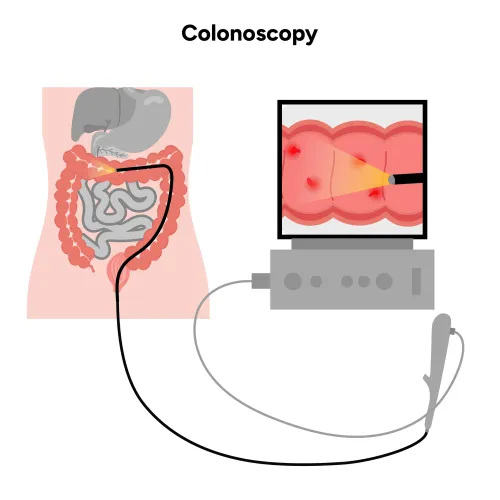
4. They use upper GI endoscopy to locate the bleeding lesion and provide haemostasis, such as clipping, thermal treatment or injection. Persistent or recurrent bleeding can require repeat endoscopy, interventional radiology or surgery.
Contact Dr Pravish Ghurde Gastroenterologist after emergency stabilisation when specialist follow-up is needed, not instead of hospital assessment. Vomiting blood, black stool with weakness, fainting or instability requires emergency care now; do not drive yourself.
Related service
Upper GI Bleeding Treatment Dr. Pravish Ghurde provides prompt and advanced care for upper gastrointestinal (GI) bleeding at Platinum Hospital, Mulund, Mumbai. View service → |
Frequently asked questions
What does blood from an upper GI bleed look like?
Vomited blood can be bright red or dark brown and grainy, like coffee grounds. Stool can look black, tarry, and sticky.
Which symptoms mean I need emergency care now?
Call emergency services for fainting, confusion, severe weakness, rapid breathing, heavy bleeding, repeated vomiting, or black tarry stools.
What should I do while waiting for medical help?
Do not eat or drink, avoid aspirin and ibuprofen, lie on your side if vomiting, and bring a list of medicines and medical conditions.
Which conditions and medicines increase upper GI bleeding risk?
Risk rises with stomach ulcers, gastritis, liver disease, previous GI bleeding, blood thinners, aspirin, ibuprofen, naproxen, and steroids.
What happens during emergency assessment and treatment?
Clinicians check your airway, blood pressure, pulse, blood tests, and circulation, then use medicines, fluids or transfusion, and endoscopy to find and treat bleeding.