When patients hear the word "endoscopy," they often picture a single, specific procedure. In clinical practice, however, endoscopy serves as a broad umbrella term for any procedure that uses a specialized illuminated probe and camera to look inside the human body.
For gastroenterology patients, choosing the right diagnostic modality depends heavily on which part of the digestive tract needs evaluation, whether a tissue sample (biopsy) is required, and what therapeutic interventions might be performed on the spot.
Below is a breakdown of the primary types of gastrointestinal endoscopies, how they differ, and why your gastroenterologist selects one over the other.
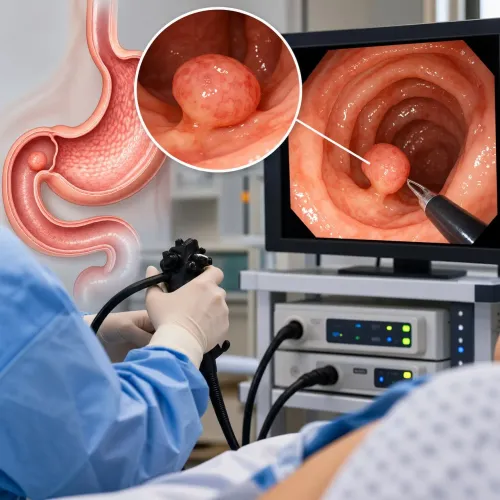
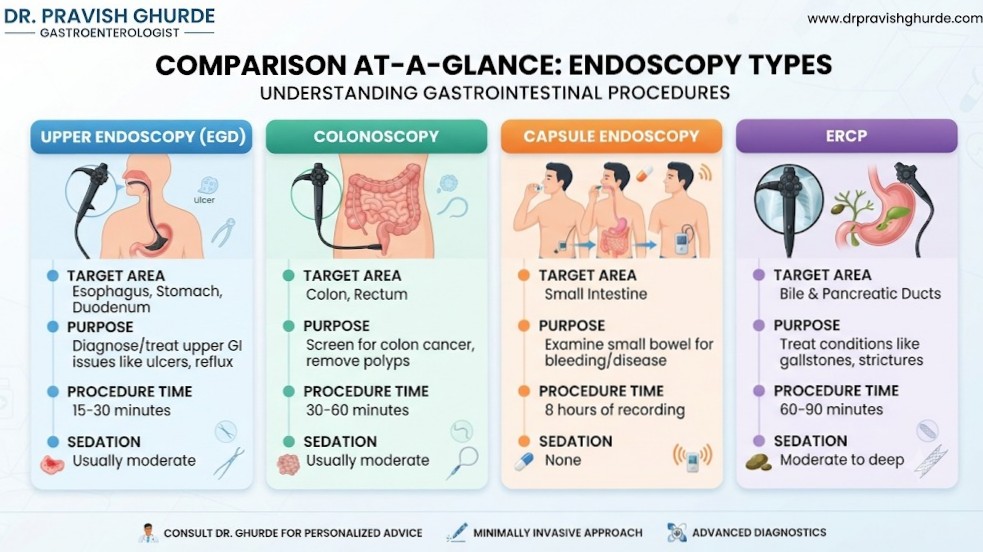
1. Upper Endoscopy (OGD / Oesophagogastroduodenoscopy)
• The Route: Enters through the mouth, passing down the oesophagus and stomach into the duodenum (the first part of the small intestine).
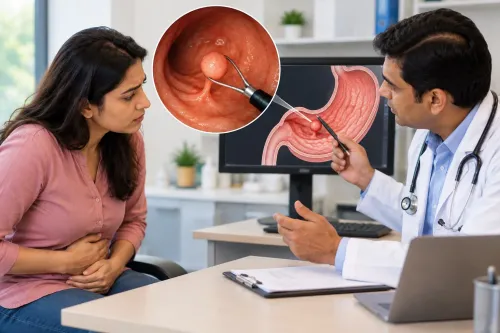
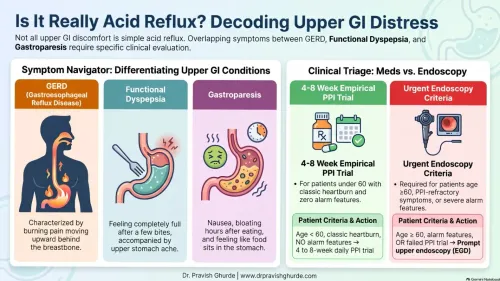
• Primary Indications: Persistent acid reflux (GERD), difficulty swallowing (dysphagia), chronic upper abdominal pain, unexplained nausea, or suspected peptic ulcers.
• Key Advantage: It allows for direct visual inspection of mucosal lining changes (such as Barrett’s oesophagus or gastritis) and immediate therapeutic interventions like banding bleeding varices, dilating strictures, or taking targeted biopsies.
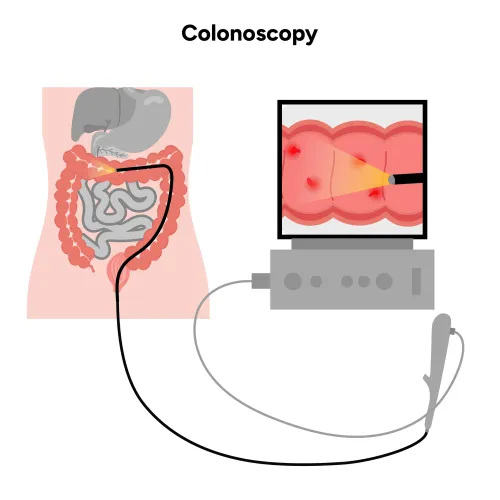
2. Colonoscopy
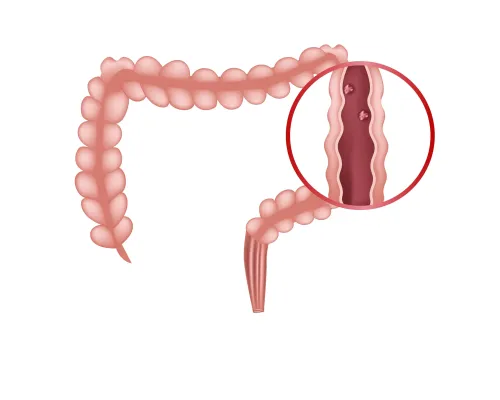
• The Route: Enters through the rectum to examine the entire large intestine (colon) and the terminal ileum.
• Primary Indications: Colorectal cancer screening (recommended starting at age 45 for average-risk adults), evaluation of rectal bleeding, chronic diarrhoea, or surveillance of inflammatory bowel disease (IBD).
• Key Advantage: It is the gold standard for colorectal cancer prevention. Gastroenterologists can not only diagnose lesions but also actively remove precancerous polyps (polypectomy) during the same session, effectively stopping cancer before it develops.
3. Capsule Endoscopy
• The Route: Ingested orally as a small, pill-sized capsule, which transmits thousands of wireless images to a wearable recorder as it moves naturally through the GI tract.
• Primary Indications: Evaluating obscure gastrointestinal bleeding, mapping out small bowel Crohn's disease, or identifying small-intestinal lesions that standard OGD and colonoscopy cannot reach.
• Key Advantage: It provides an unprecedented, non-invasive look at the middle section of the small intestine without requiring sedation.
• The Limitation: It is strictly diagnostic. Capsule endoscopy cannot capture tissue biopsies or treat bleeding vessels on the spot; if a lesion is found, a traditional device-assisted endoscopy or conventional scope may be needed.
4. Endoscopic Retrograde Cholangiopancreatography (ERCP)
• The Route: Enters via the mouth down to the duodenum, where a specialized side-viewing scope identifies the opening to the bile and pancreatic ducts, combining endoscopy with fluoroscopic X-ray guidance.
• Primary Indications: Obstructive jaundice, suspected gallstones lodged in the common bile duct, bile duct strictures, or evaluation of pancreatic disease.
• Key Advantage: Highly therapeutic. It allows specialists to extract bile duct stones, widen narrow ducts, and place stents to relieve dangerous biliary obstructions.
The Takeaway for Patients
No single test rules them all. Rather than being competitors, these procedures work as a complementary toolkit. Depending on your clinical presentation, history, and physical findings, your gastroenterologist will choose the specific modality tailored to your gut health needs.
If you are experiencing persistent digestive symptoms or have questions regarding which screening test is right for you, consult a qualified gastroenterologist to map out a personalized diagnostic plan.
Keywords