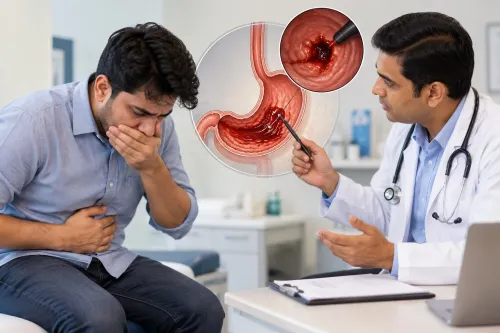
Some digestive conditions involve structures that most patients rarely think about until a problem develops: the bile ducts and pancreatic ducts. When stones, narrowing or other abnormalities affect these ducts, a specialised endoscopic procedure may be considered. An ERCP Specialist evaluates whether endoscopic retrograde cholangiopancreatography is appropriate and whether its potential benefit justifies the procedural risks.
For patients in Mulund, Mumbai, understanding the purpose of ERCP is particularly important because it is different from routine gastroscopy.
What Is ERCP?
ERCP combines endoscopy with specialised imaging to access and treat certain disorders involving the bile and pancreatic ducts.
Unlike diagnostic gastroscopy, ERCP is commonly performed for therapeutic reasons rather than simply to inspect the digestive tract.
Depending on the condition, it may be used for procedures such as removing bile duct stones, relieving obstruction, placing a stent or obtaining samples from selected abnormalities.
When Might ERCP Be Considered?
Possible indications can include:
- Stones in the common bile duct
- Bile duct obstruction
- Certain bile duct strictures
- Selected pancreatic duct problems
- Cholangitis requiring biliary drainage
- Other conditions requiring therapeutic duct intervention
Before recommending ERCP, doctors frequently use blood tests and imaging to understand the likely location and nature of the problem.
Ultrasound, CT, MRI-based imaging or endoscopic ultrasound may sometimes provide important information without immediately requiring ERCP.
Why Isn't ERCP Used for Every Suspected Bile Duct Problem?
ERCP is an invasive procedure with recognised risks. For this reason, it is generally used when there is a clear clinical indication and a reasonable expectation that intervention may be required.
Potential complications can include pancreatitis, bleeding, infection and perforation, among others.
The individual risk varies according to the patient's condition, the type of intervention and procedural factors. These considerations should be discussed before treatment.
Symptoms of Biliary Obstruction Need Evaluation
Bile duct problems can present in different ways.
Patients may experience jaundice, dark urine, pale stools, itching, upper abdominal pain, fever or abnormal liver tests. Some people are initially identified through imaging rather than symptoms.
Fever with jaundice and significant abdominal pain can indicate a potentially serious biliary infection and requires prompt medical assessment.
What Should Be Discussed Before ERCP?
Patients should understand why the procedure is being recommended and what treatment may be attempted during it.
Useful questions include:
- What has imaging shown?
- Is ERCP being recommended for diagnosis, treatment or both?
- What intervention may be performed?
- What are the important risks in my case?
- Are alternative investigations appropriate?
- What preparation is required?
- What follow-up may be needed afterward?
Medication history is also important, particularly anticoagulant or antiplatelet medicines and diabetes treatment.
Advanced Procedures Require Appropriate Clinical Selection
Dr Pravish Ghurde Gastroenterologist provides evaluation for gastrointestinal, liver, pancreatic and biliary disorders, including advanced endoscopic management where clinically indicated.
Patients looking for an ERCP Specialist in Mulund should consider not only whether the procedure is available, but whether there is careful assessment before ERCP and appropriate follow-up afterward.
The most important question is not simply, 'Can ERCP be performed?' It is, 'Is ERCP the appropriate procedure for this particular problem?'
For patients in Mumbai, that distinction matters because modern gastrointestinal care increasingly uses non-invasive imaging to define the problem first and reserves therapeutic procedures for situations where they can provide a meaningful diagnostic or treatment benefit.
Keywords