Heartburn that keeps returning is often described simply as 'acidity.' While occasional reflux is common, frequent burning in the chest, sour-tasting fluid in the mouth or discomfort after meals may indicate gastroesophageal reflux disease. A GERD Treatment Specialist evaluates why these symptoms persist and whether additional investigation is necessary.
For people living in Mumbai, Maharashtra, eating schedules, late meals, travel, shift work and individual dietary habits can all influence reflux symptoms. However, lifestyle alone is not always the complete explanation.
What Actually Happens in GERD?
The oesophagus carries food from the mouth to the stomach. At its lower end, a muscular valve normally helps limit the backward movement of stomach contents.
When reflux occurs repeatedly, acidic stomach contents can move upward into the oesophagus and produce symptoms.
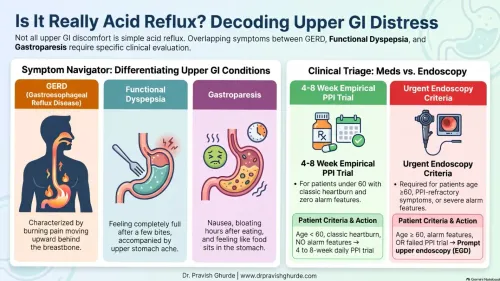
Typical symptoms include:
- Burning behind the breastbone
- Sour or bitter regurgitation
- Symptoms after meals
- Night-time reflux
- Upper abdominal discomfort
Some patients may experience less typical symptoms, which is why persistent complaints benefit from individual assessment rather than self-diagnosis.
Why Does Heartburn Return After Medication?
Acid-suppressing medication can be useful when prescribed appropriately, but recurring symptoms may have several explanations.
Medication timing may be incorrect. Dietary or behavioural triggers may still be present. The original diagnosis may need reconsideration. Some patients may have associated conditions that require further evaluation.
The goal is therefore not simply to continue medication indefinitely without review. Persistent symptoms should prompt consideration of why treatment has not provided adequate control.
Lifestyle Changes Can Support GERD Management
Not every person has the same triggers, so overly restrictive diets are rarely helpful. Instead, patients can observe which foods or habits consistently worsen symptoms.
Useful measures may include:
- Avoiding very large meals.
- Allowing time between the evening meal and lying down.
- Identifying personal food triggers.
- Managing excess body weight where relevant.
- Avoiding tobacco.
- Discussing alcohol intake where applicable.
- Taking prescribed medicines at the recommended time.
Patients with night-time symptoms may need additional guidance depending on their circumstances.
When Might Gastroscopy Be Considered?
Not everyone with reflux needs an endoscopy. Gastroscopy may be recommended when symptoms, age, medical history or warning signs indicate a need to examine the upper gastrointestinal tract directly.
It may also be considered when symptoms remain troublesome despite appropriate management or when there is uncertainty about the diagnosis.
Warning signs can include swallowing difficulty, gastrointestinal bleeding, persistent vomiting, anaemia or unexplained weight loss.
GERD Can Resemble Other Conditions
Chest discomfort should never automatically be assumed to be reflux. Cardiac and other causes can produce similar symptoms.
New, severe or unexplained chest pain, particularly with breathlessness, sweating, dizziness or pain spreading to the arm or jaw, requires urgent medical evaluation.
This distinction is especially important because patients who have experienced acidity before may incorrectly attribute every episode of chest discomfort to the stomach.
Building a More Individual Treatment Plan
A GERD Treatment Specialist considers symptom frequency, timing, triggers, response to previous medicines and whether warning signs are present.
Dr Pravish Ghurde Gastroenterologist provides evaluation for reflux and other upper gastrointestinal conditions in Mumbai, with gastroscopy considered when clinical findings indicate that direct examination would be useful.
The objective of GERD care is to understand the pattern behind recurring symptoms, use medication appropriately and identify patients who require additional investigation.
Frequent acidity does not necessarily indicate a serious condition, but symptoms that repeatedly return should not simply become part of everyday life. Appropriate evaluation can clarify whether the problem is straightforward reflux or whether another gastrointestinal condition needs attention.
Keywords