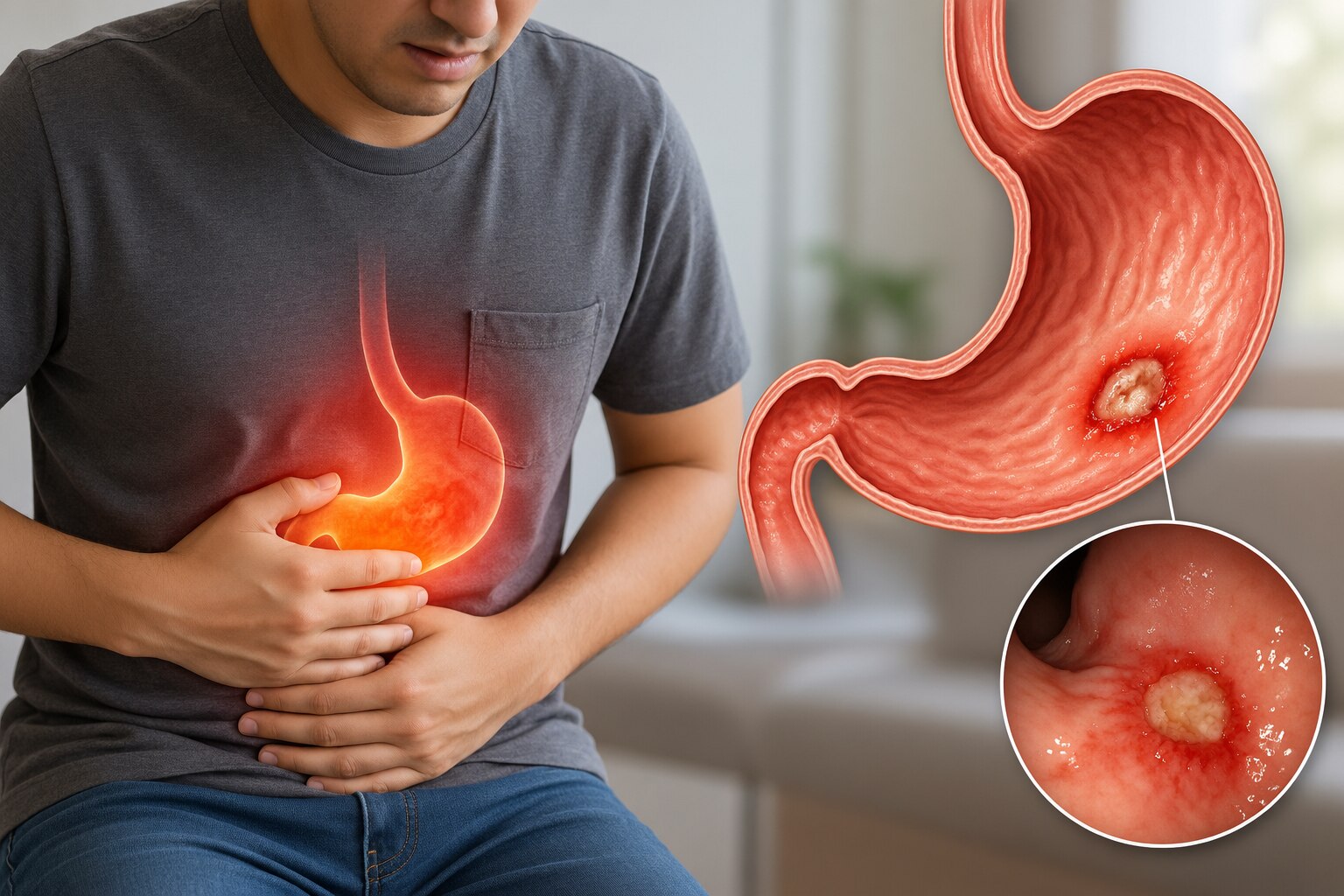
Upper-abdominal pain, nausea or dark stools do not identify an ulcer by themselves, and some ulcers produce no warning before bleeding or perforation. You will learn how gastric and duodenal ulcers differ, which symptoms need urgent action, how clinicians confirm the cause, and how to reduce the chance of recurrence.
Key takeaways
- H. pylori and NSAIDs are the leading causes of peptic ulcers.
- Black stools, vomiting blood, faintness or sudden severe pain need emergency care.
- Endoscopy and H. pylori testing help confirm the ulcer and its cause.
- Complete prescribed treatment and avoid unnecessary NSAIDs to prevent recurrence.
Gastric and Duodenal Ulcers: Causes, Locations and Risk Factors
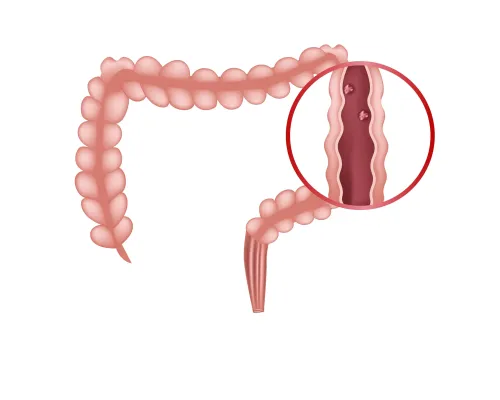
Peptic ulcers are breaks in the protective lining of the stomach or duodenum caused by acid and digestive enzymes. The two main causes are H. pylori infection and NSAIDs, including aspirin, ibuprofen, naproxen and diclofenac. These medicines weaken the lining and reduce its ability to repair itself.
| Type | Location | Common pattern | Key distinction |
|---|---|---|---|
| Gastric ulcer | Stomach lining | Pain can worsen soon after eating | A doctor may biopsy it or arrange follow-up endoscopy to confirm healing and exclude cancer |
| Duodenal ulcer | First part of the small intestine | Pain can ease briefly after food, then return two to five hours later or at night | Malignancy is much less common than with a gastric ulcer |
Pain patterns do not identify an ulcer reliably. Some ulcers cause no pain until bleeding or perforation, while reflux, gallbladder disease and functional dyspepsia can feel similar. A gastric ulcer that looks benign is not automatically non-cancerous.
Smoking raises ulcer risk and slows healing. Older age, a previous ulcer, heavy alcohol use, corticosteroids, anticoagulants and continued NSAID use add risk; corticosteroids and anticoagulants are especially concerning when combined with NSAIDs. Severe physiological stress, such as critical illness, can cause ulcers, while spicy food and everyday stress are not established primary causes.
How Ulcer Pain and Other Symptoms Can Present
Burning upper-abdominal pain or gnawing stomach pain can fit an ulcer, but neither symptom proves one. You might also notice early fullness, nausea, bloating, vomiting, or pain after meals. Some ulcers cause no symptoms until bleeding or perforation occurs.
Pain timing can offer a clue, not a diagnosis:
| Pattern | Gastric ulcer | Duodenal ulcer |
|---|---|---|
| Pain after eating | Pain often starts during or soon after meals; food can aggravate it | Pain often begins several hours after eating; food may briefly ease it |
| Night pain | Can occur | More characteristic, including night pain from ulcer disease |
| Reliability | Timing varies and cannot confirm an ulcer | Timing varies and cannot confirm an ulcer |
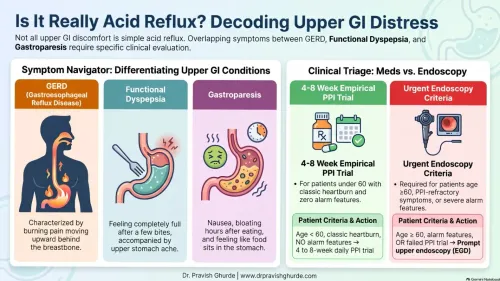
Dyspepsia, reflux disease, gallbladder disease, pancreatitis, and functional dyspepsia can all feel similar. Functional dyspepsia causes upper-abdominal discomfort without an identifiable ulcer, while reflux more often brings burning behind the breastbone or sour fluid into the throat. Persistent vomiting, unexplained weight loss, or iron-deficiency anaemia needs medical assessment rather than self-treatment.
Sudden severe abdominal pain that persists, especially with a rigid or very tender abdomen, is different from ordinary ulcer discomfort. Seek emergency care immediately because it can signal perforation, even if earlier symptoms were mild or absent.
When Possible Bleeding or Perforation Requires Emergency Care
Vomiting bright-red blood, coffee-ground vomit, black tarry stools, fainting or near-fainting, marked weakness, a rapid heartbeat, clammy skin, confusion or trouble breathing require emergency care.
Sudden severe, persistent abdominal pain with a rigid or very tender abdomen may mean the ulcer has perforated; this is a surgical emergency, even if earlier pain was mild or absent.
While waiting for help:
- Call emergency services; do not drive yourself.
- Sit upright if you are alert, or lie on your side if you feel faint or are vomiting.
- Do not eat, drink, or take ibuprofen, naproxen, diclofenac, or extra medicines unless emergency clinicians tell you to.
- Do not stop prescribed low-dose aspirin without medical advice, particularly after a heart attack, stroke, or coronary stent. Tell the emergency team exactly why you take it.
- Keep any vomit, stool description, and medicine packets available, including aspirin, anti-inflammatory drugs, iron, and bismuth subsalicylate.
Melena versus iron tablets or bismuth subsalicylate?
| Finding | Typical appearance | Action |
|---|---|---|
| Melena from bleeding | Black, sticky, tar-like, often foul-smelling stools | Treat as an emergency, especially with weakness or dizziness |
| Iron tablets | Dark green-black stools, without a tar-like texture | Contact a clinician if bleeding symptoms occur |
| Bismuth subsalicylate | Gray-black stool or tongue | Do not assume bleeding is excluded; seek urgent care for tarry stool or other warning signs |
How Doctors Confirm an Ulcer and Its Underlying Cause
Doctors confirm an ulcer with a combination of blood tests, H. pylori testing and, when needed, upper endoscopy. A complete blood count can reveal anemia and ongoing blood loss, although it cannot locate an ulcer or identify its cause.
| Test | What it shows | Preparation or use |
|---|---|---|
| H. pylori stool antigen test | Detects active infection | Stop PPI treatment for 2 weeks and antibiotics or bismuth for 4 weeks when clinically safe; follow your clinician’s instructions |
| Urea breath test | Detects active H. pylori infection | Urea breath test preparation includes PPI withdrawal for 2 weeks and antibiotics or bismuth withdrawal for 4 weeks; test at least 4 weeks after treatment |
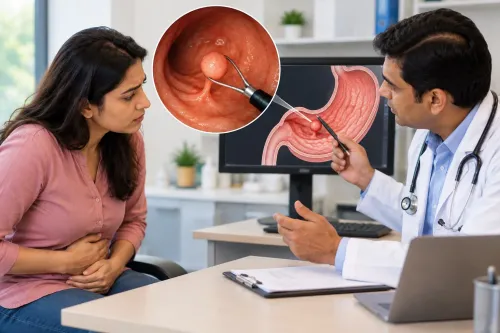
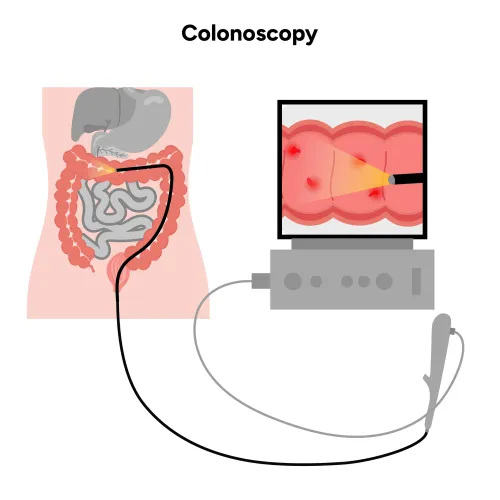
| Upper endoscopy | Directly views the stomach and duodenum, takes biopsies and treats bleeding | Fast as instructed; sedation requires an escort and no driving afterward |
A negative H. pylori stool antigen test or breath test can be falsely reassuring during PPI, antibiotic or bismuth use. After eradication treatment, repeat a breath, stool or biopsy-based test at least 4 weeks after antibiotics and 2 weeks after stopping PPIs.
Upper endoscopy is necessary for gastrointestinal bleeding, persistent vomiting, iron-deficiency anemia, unexplained weight loss, difficulty swallowing or suspected perforation. It is also preferred when symptoms persist or a gastric ulcer needs biopsy to exclude malignancy.
Dr Pravish Ghurde Gastroenterologist can help choose between non-invasive testing and endoscopy when symptoms, medicines and alarm signs point in different directions.
Related services
Peptic Ulcer disease Dr. Pravish Ghurde offers expert diagnosis and effective treatment for peptic ulcer disease at Platinum Hospital, Mulund, Mumbai. View service → |
Upper GI Bleeding Treatment Dr. Pravish Ghurde provides prompt and advanced care for upper gastrointestinal (GI) bleeding at Platinum Hospital, Mulund, Mumbai. View service → |
Treatment Choices and Preventing a Repeat Ulcer
A positive H. pylori test changes treatment: antibiotics are needed, not acid suppression alone. When antibiotic susceptibility is unknown, many previously untreated adults receive 14 days of optimized bismuth quadruple therapy: a PPI, bismuth, tetracycline and metronidazole. Clarithromycin-containing regimens are unsuitable when clarithromycin resistance is known or suspected.
Symptoms improving does not prove the infection is gone. Arrange H. pylori eradication confirmation with a urea breath test, stool antigen test or biopsy-based test at least 4 weeks after antibiotics finish, and stop PPIs or potassium-competitive acid blockers for at least 2 weeks beforehand, unless your clinician gives different instructions.
- For an NSAID-associated ulcer, stop ibuprofen, naproxen, diclofenac or the responsible anti-inflammatory if possible.
- If an NSAID must continue, ask whether a COX-2-selective drug plus a PPI is appropriate; this is not safe for every patient.
- Complete the prescribed acid-suppression course, even after pain settles.
- Have an aspirin and ulcer bleeding medication review covering prescriptions, over-the-counter painkillers, anticoagulants, corticosteroids and combination cold remedies.
- Do not stop low-dose aspirin abruptly when it protects against a heart attack, stroke or coronary-stent clot; the prescriber must balance bleeding against cardiovascular risk.
A bleeding ulcer with active oozing, spurting or a visible vessel needs endoscopic haemostasis followed by high-dose PPI therapy, not tablets alone. Recurrent bleeding is usually treated with repeat endoscopy; angiographic embolisation or surgery is considered when endoscopic control fails.
Frequently asked questions
What causes gastric and duodenal ulcers?
H. pylori infection and NSAIDs such as aspirin, ibuprofen, naproxen and diclofenac are the two main causes. Gastric ulcers form in the stomach; duodenal ulcers form in the first part of the small intestine.
What does peptic ulcer pain feel like?
Pain can occur in the upper abdomen and may feel burning, aching or gnawing. Some people also have indigestion, nausea, early fullness or bloating, while others have no symptoms until a complication develops.
When is an ulcer a medical emergency?
Seek emergency care for vomiting blood, black tarry stools, faintness, marked weakness, sudden severe abdominal pain or a rigid abdomen. These signs can indicate bleeding or perforation.
How do doctors diagnose a peptic ulcer?
Doctors may use upper endoscopy to inspect the stomach and duodenum, take a biopsy when needed, and test for H. pylori with breath, stool or biopsy-based testing. They also review NSAID use and other medicines.
How can you prevent another peptic ulcer?
Take the full prescribed treatment, complete H. pylori eradication therapy when infection is found, and do not restart NSAIDs without medical advice. Ask about safer pain-relief options if you need frequent analgesics.